What happened
Resend published an AI Catalog and an MCP Server Card on 26 Oct 2026, in its changelog. “Resend now publishes an AI Catalog and an MCP Server Card, so supporting clients can discover the Resend MCP server from just a URL.”
Resend says the catalog sits at resend.com/.well-known/ai-catalog.json and the Server Card at mcp.resend.com/mcp/server-card, with the server’s name, Streamable HTTP endpoint and supported protocol versions. Sign-in does not change: OAuth, or a Resend API key sent as a Bearer token when no browser is involved. Server Cards are an official MCP extension, Resend says. Read Resend’s changelog entry[1].
What our drives saw
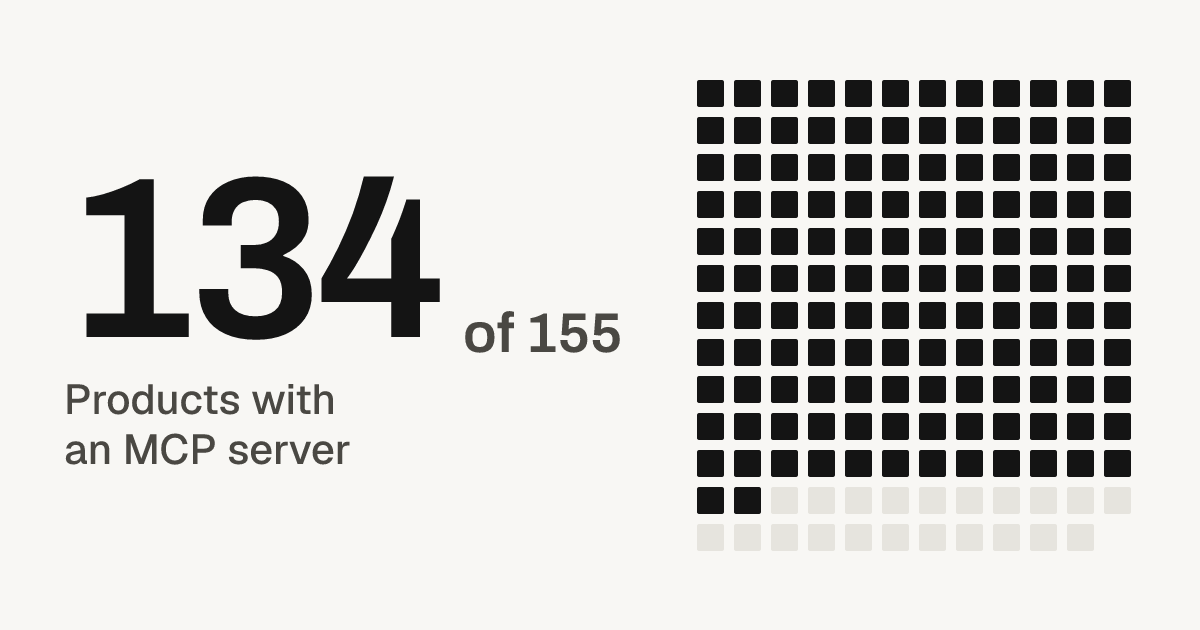
As of 26 October 2026, 134 of 155 products we drove have an MCP server, and 128 of 155 have an official one. Our agent got into 51 of 134 of those products on its own, and 83 of 134 stopped it at the door.
On its latest drive, Resend’s own sign-up answered our agent’s email and password form with a generic error, while a passive bot check ran. The full record is on Resend’s page. The numbers behind this note are in our facts.
What it means
For owners: a Server Card tells a client where your MCP server is and which protocol versions it speaks, before it connects. That saves an agent the trip through your docs. It does not open the account the server sits behind. If an agent can’t make that account or get a key without a person, discovery leads it to a sign-in it can’t finish. Publishing the card and checking your sign-up path for agents are separate jobs, and you need both.
For builders: if your client supports Server Card discovery, you can point it at resend.com instead of the full server URL. Your agent still needs a Resend account and either an OAuth sign-in or an API key you hand it. Plan for that step as a person’s task.
What we don’t know
Resend’s post doesn’t say which MCP clients read an AI Catalog or a Server Card today. The Server Card, as Resend describes it, lists the endpoint and protocol versions; the post doesn’t say whether it also describes the sign-in a client should expect. Our drives record whether a product has an MCP server and whether our agent got in; whether a product publishes a Server Card is outside this data.